Why Premium Carbon Fiber Parts Still Face Yellowing Problems
Carbon fiber parts have become a popular choice for high-performance vehicles because they combine lightweight construction, high strength, and a premium visual appearance.
However, many vehicle owners and automotive brands face the same long-term problem: carbon fiber parts gradually turn yellow after continuous UV exposure.
This issue often appears on:
- Custom carbon fiber body kits
- Carbon fiber spoilers
- Carbon fiber hoods
- Mirror covers
- Interior carbon fiber trims
Although the carbon fiber weave itself remains stable, the protective resin layer on the surface can degrade under sunlight. As a result, the original deep gloss finish becomes faded, yellowed, or cloudy.
Therefore, preventing yellowing requires more than high-quality carbon fiber materials. It requires advanced surface protection technology.
At SAIBANG, professional custom carbon fiber parts use automotive-grade 2K UV-resistant clear coats to improve weather resistance, maintain surface appearance, and extend product lifespan.
1. Why Do Carbon Fiber Parts Turn Yellow Over Time?
Many people believe carbon fiber itself causes yellowing. However, this understanding is incorrect.
The actual cause comes from the resin system and surface coating.
The Real Cause: Resin Photo-Oxidation Degradation
Carbon fiber components usually combine:
- Carbon fiber fabric
- Epoxy resin
- Surface clear coating
The epoxy resin creates a strong composite structure. However, when the resin remains exposed to ultraviolet radiation, chemical changes occur.
UV energy breaks molecular bonds inside the resin.
Consequently, the material experiences:
- Photo-oxidation
- Molecular chain breakdown
- Color change
- Surface aging
This process gradually creates a yellow appearance.
Therefore, the yellowing problem is not caused by carbon fibers. Instead, it results from insufficient UV protection on the resin surface.
2. How UV Exposure Damages Carbon Fiber Surfaces
Automotive carbon fiber parts often operate in harsh outdoor environments.
Vehicles experience:
- Direct sunlight
- Temperature changes
- Rain exposure
- Humidity
- Road contaminants
Among these factors, UV radiation creates the greatest long-term impact.
Stage 1: UV Penetration
When sunlight reaches the carbon fiber surface, ultraviolet rays penetrate the clear layer.
Without proper protection, UV energy reaches the resin layer.
Stage 2: Resin Oxidation
The resin reacts with oxygen during UV exposure.
This chemical reaction gradually changes the resin structure.
As a result:
- Transparency decreases
- Surface color changes
- Gloss level reduces
Stage 3: Visible Yellowing
After long-term exposure, the surface develops:
- Yellow tint
- Hazy appearance
- Reduced depth effect
For premium automotive applications, this appearance change significantly reduces product value.
Therefore, manufacturers must apply professional UV-resistant coatings before delivery.
3. Why Automotive-Grade 2K UV-Resistant Clear Coat Matters
A high-performance clear coat acts as the first protective barrier between sunlight and carbon fiber resin.
Unlike basic coatings, a professional 2K polyurethane clear coat provides stronger chemical and environmental resistance.
What Is a 2K Clear Coat?
A 2K coating contains two components:
- Polyurethane resin
- Hardener component
After mixing, these components create a durable cross-linked coating structure.
Compared with single-component coatings, 2K systems provide:
- Higher hardness
- Better chemical resistance
- Stronger UV protection
- Longer service life
Therefore, automotive manufacturers widely use 2K clear coats for high-end exterior applications.
4. How 2K UV Clear Coat Prevents Carbon Fiber Yellowing
A professional UV-resistant clear coat protects carbon fiber parts through multiple mechanisms.
1. UV Absorption and Blocking
The coating contains UV-resistant additives that reduce ultraviolet penetration.
As a result, fewer UV rays reach the epoxy resin underneath.
This slows down:
- Resin oxidation
- Molecular degradation
- Color change
2. Surface Protection Against Environmental Damage
Vehicles encounter many external contaminants.
A high-quality, clear coat protects against:
- Acid rain
- Dust
- Chemicals
- Washing agents
- Minor scratches
Therefore, the carbon fiber surface maintains a better appearance during daily use.
3. Maintaining Optical Depth and Gloss
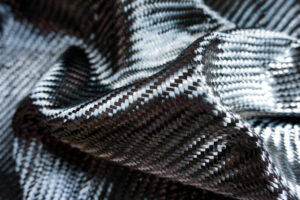
Premium carbon fiber products rely on the visible 3D weave effect.
A quality clear coat preserves:
- Carbon fiber texture visibility
- Gloss consistency
- Surface smoothness
As a result, the component maintains its premium appearance over the years.
5. High-Gloss vs Matte Clear Coat: Which One Protects Better?
Professional carbon fiber manufacturers usually provide two surface finishing options:
- High-gloss clear coat
- Matte clear coat
Both can provide UV protection. However, they create different visual effects.
| Feature | High-Gloss Clear Coat | Matte Clear Coat |
|---|---|---|
| Appearance | Deep shine finish | Smooth satin texture |
| Carbon Fiber Visibility | Maximum weave depth | More subtle appearance |
| Surface Reflection | High reflection | Low reflection |
| Maintenance | Easier cleaning | Requires careful care |
| Application | Luxury sports styling | Performance styling |
High-Gloss Carbon Fiber Finish
A high-gloss coating enhances the carbon fiber weave.
It creates:
- Mirror-like reflection
- Premium automotive appearance
- Strong visual depth
This finish is commonly selected for:
- Sports cars
- Luxury vehicles
- Exterior body kits
Matte Carbon Fiber Finish
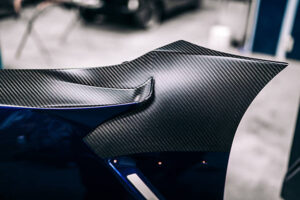
Matte coatings provide a more aggressive appearance.
They create:
- Stealth styling
- Racing-inspired appearance
- Reduced surface reflection
This option is popular for:
- Track vehicles
- Performance modifications
- Motorsport applications
6. QUV Testing: How Manufacturers Verify UV Resistance
A professional carbon fiber parts supplier should validate coating durability through accelerated aging tests.
One common method is QUV testing.
What Is QUV Testing?
QUV testing simulates long-term outdoor exposure in a controlled environment.
The test evaluates:
- UV resistance
- Color stability
- Gloss retention
- Surface durability
During testing, the samples experience:
- UV radiation cycles
- Temperature changes
- Moisture conditions
This process helps manufacturers predict long-term outdoor performance.
Why QUV Testing Matters for Carbon Fiber Parts
Without testing, manufacturers cannot accurately evaluate coating performance.
A reliable supplier should verify:
- Coating formulation quality
- Surface preparation standards
- Long-term appearance stability
Therefore, QUV testing provides stronger quality assurance for custom carbon fiber products.
7. How to Choose Carbon Fiber Parts That Will Not Yellow Easily
When purchasing custom carbon fiber parts, buyers should evaluate more than appearance.
Consider these factors:
a. Clear Coat Quality
Ask suppliers:
- Do they use automotive-grade coatings?
- Is the coating UV-resistant?
- Does the supplier provide durability testing?
b. Manufacturing Process
A professional manufacturer should control:
- Resin quality
- Surface preparation
- Coating application
- Curing process
c. Environmental Testing
Reliable suppliers should provide evidence of:
- UV aging tests
- Weather resistance evaluation
- Surface durability testing
Conclusion: Advanced UV Protection Keeps Carbon Fiber Parts Looking New
Yellowing remains one of the biggest challenges for long-term carbon fiber appearance.
The carbon fiber material itself provides excellent strength and lightweight performance. However, the resin layer requires professional protection against UV damage.
By applying automotive-grade 2K UV-resistant clear coats, manufacturers can significantly reduce resin photo-oxidation and preserve the original carbon fiber appearance.
Furthermore, through high-gloss and matte finishing options, professional surface treatments, and QUV testing verification, premium custom carbon fiber parts can maintain durability and visual performance for years.
For automotive brands, modification companies, and performance vehicle manufacturers, choosing a supplier with advanced coating technology is essential.
A superior carbon fiber part is not only about lightweight strength. It is also about maintaining a premium appearance through every season.

Leave a reply