Securing premium raw materials determines the structural integrity and market reputation of your automotive brand. Consequently, global procurement managers frequently ask our engineering team at SAIBANG: “Many suppliers label their products as ‘dry carbon,’ but how do we detect fake materials? What critical quality points should we audit during the purchasing process?”
To protect your investments, this comprehensive technical guide outlines exactly how to distinguish authentic dry carbon fiber from cheap wet carbon imitations, ensuring you receive the elite performance your clients demand.
Three On-Site Verification Methods for Carbon Fiber Quality
When evaluating sample shipments from a new carbon fiber automotive parts wholesale vendor, your quality control (QC) team must bypass surface aesthetics. Instead, you should inspect the raw, physical indicators of advanced composite manufacturing.
1. Inspect the Backside Surface (Reverse Side State)
Authentic dry carbon components utilize pre-impregnated (prepreg) fibers, which undergo extreme pressure inside an autoclave.
-
The Dry Carbon Standard: Because the process expels excess resin, the reverse side of a dry carbon part feels exceptionally smooth, completely flat, and displays zero resin pooling.
-
The Wet Carbon Indicator: Conversely, wet carbon components rely on manual resin brushing. As a result, the backside invariably exhibits uneven resin accumulation, rough textures, trapped air bubbles, and visible cloth weave distortion.
2. Examine the Edges and Cross-Sectional Cuts
Analyzing the trimming line provides immediate clarity on the material’s origin.
-
The Dry Carbon Standard: A genuine autoclave-cured part features an incredibly thin, ultra-dense cross-section. Furthermore, the color remains uniform and dark grey throughout the entire cut.
-
The Wet Carbon Indicator: On the other hand, a wet carbon cross-section appears thick and bulky. It frequently reveals a distinct, multi-layered sandwich structure where a white fiberglass core or a porous resin layer hides beneath a single top layer of carbon cloth.
3. Audit Weave Alignment and Surface Pinholes
Surface defects directly compromise both aerodynamic efficiency and visual luxury.
-
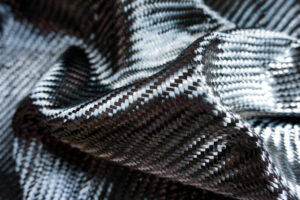
The Dry Carbon Standard: True prepreg manufacturing guarantees that the carbon weave remains perfectly straight, symmetrical, and aligned across all tight angles. Simultaneously, the surface shows absolutely zero microscopic pinholes.
-
The Wet Carbon Indicator: In contrast, the hand-layup process used in wet carbon often causes the pattern to wave, warp, or stretch. Additionally, as volatile gases escape during curing without vacuum pressure, small pinholes and surface craters inevitably form.
Technical Documentation to Demand from Your Supplier
Words cannot substitute for verifiable manufacturing logs. To successfully verify carbon fiber quality, your procurement department must mandate that the prepreg carbon fiber manufacturer provides the following three quality assurance (QA) items before you sign a bulk contract:
-
Autoclave Curing Curves and Parameter Records: Authentic dry carbon requires precise computerized tracking of thermal cycles and atmospheric pressures. Therefore, a real manufacturer can easily generate the timestamped pressure-temperature graphs for your specific production batch.
-
Prepreg Material Source Certifications: Request the original material data sheets (MDS) and bills of lading for the carbon fiber yarn and resin systems. This documentation proves the supplier actually purchases industrial-grade prepreg carbon rather than standard liquid resin.
-
Raw, Uncoated Photos of the Product Backside: Demand high-resolution, unedited photos of the component reverse sides straight out of the mold before any clear-coating, sanding, or painting occurs. True dry carbon needs no cosmetic masking.
Essential Factory Standards and Certifications
Ultimately, auditing the factory’s structural compliance mitigates long-term supply chain risks. When choosing an autoclave carbon fiber supplier, you should prioritize facilities that hold internationally recognized manufacturing credentials.
ISO 9001 Certification
First and foremost, prioritize suppliers operating under an active ISO 9001 Quality Management System. This framework ensures the factory enforces strict batch traceability, standardized molding steps, and consistent material handling protocols.
TÜV Material Integrity Certification
For high-stress aerospace or automotive applications, you should look a step further and request TÜV Material Integrity Certifications. A TÜV stamp confirms that independent laboratories have stress-tested the components for structural rigidity, UV resistance, and crash-test deformation compliance.
Partner with SAIBANG for Certified Dry Carbon Fiber Components
As an industry-leading, elite dry carbon fiber manufacturer, SAIBANG guarantees 100% authentic prepreg production for all our premium car body kits, spoilers, and interior trims. We operate state-of-the-art industrial autoclaves and strictly enforce ISO 9001 standards, thereby providing our B2B partners with full transparency, complete traceability logs, and uncompromised structural performance.
Contact our technical procurement team today to schedule a virtual factory audit, request raw samples, or secure competitive bulk quotes for your wholesale distribution networks.
Leave a reply