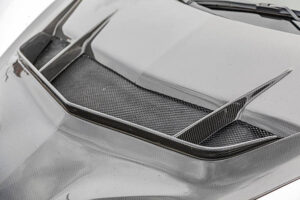
Carbon fiber has become increasingly popular among car owners and modification enthusiasts, especially for custom car parts. Its appeal comes from more than its sleek, modern appearance. In fact, carbon fiber also offers excellent structural properties and a high strength-to-weight ratio.
As automotive technology continues to evolve, material selection plays an increasingly important role in vehicle performance and appearance. Therefore, understanding the properties of carbon fiber is essential for enthusiasts considering custom carbon fiber car parts.
One major advantage of carbon fiber is its excellent strength-to-weight ratio. It provides high structural strength while keeping component weight relatively low. As a result, carbon fiber is well suited to automotive applications where performance and efficiency are important.
For example, reducing vehicle weight can improve acceleration, handling, and fuel efficiency. Therefore, many car enthusiasts choose lightweight carbon fiber components to replace selected traditional metal parts.
In addition, carbon fiber can improve the stiffness of certain vehicle components. This reduced flex can benefit high-performance driving and help maintain more consistent vehicle behavior.
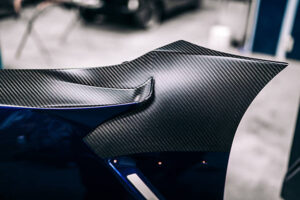
Meanwhile, carbon fiber also adds a distinctive visual appearance. Glossy woven patterns can create a premium, performance-oriented look. Consequently, carbon fiber has become an important material in both automotive performance upgrades and exterior styling.
For the automotive aftermarket, material selection directly affects both functionality and aesthetics. Therefore, understanding carbon fiber manufacturing methods can help buyers select the right material for their specific modification project.
Wet Carbon vs. Dry Carbon: Manufacturing Process Comparison
Carbon fiber parts are commonly produced using different manufacturing processes. Two widely discussed options are wet carbon fiber, often associated with hand lay-up and liquid resin application, and dry carbon fiber, typically produced using pre-preg materials.
Although both processes use carbon fiber reinforcement, their manufacturing methods can significantly affect the final part’s weight, consistency, strength, cost, and appearance.
What Is Wet Carbon Fiber?
The wet carbon process involves placing carbon fiber fabric into a mold and then applying liquid resin to saturate the fibers.
This manufacturing method offers considerable flexibility. For example, manufacturers can produce custom shapes and relatively low-volume components without requiring the same level of tooling investment as some advanced processes.
However, the process requires considerable manual work. Resin distribution, fiber placement, and laminate thickness depend heavily on manufacturing control.
As a result, wet carbon components can show greater variation in resin content, thickness, and fiber distribution if process control is inconsistent.
Nevertheless, wet carbon remains a practical option for many custom automotive carbon fiber parts, particularly when flexibility and production cost are important considerations.
What Is Dry Carbon Fiber?
In contrast, dry carbon fiber commonly uses pre-impregnated carbon fiber, also known as pre-preg.
The carbon fabric is supplied with a controlled amount of resin before the molding process. The material is normally stored at low temperatures to prevent premature curing.
During production, the pre-preg material is placed into a mold and cured under controlled heat and pressure. Autoclave curing is commonly used for high-performance carbon fiber components.
Because the resin-to-fiber ratio can be controlled more precisely, the finished material can achieve greater consistency.
Furthermore, controlled curing can reduce void content and improve the mechanical properties of the finished component.
As a result, dry carbon is commonly selected for applications where low weight, high stiffness, consistency, and premium performance are critical.
Wet Carbon vs. Dry Carbon: Performance and Durability
When purchasing custom carbon fiber car parts, buyers should look beyond appearance. The manufacturing method can also influence weight, mechanical performance, durability, and production cost.
Therefore, understanding the differences between wet carbon and dry carbon is essential for making an informed decision.
Weight and Structural Performance
Wet carbon components generally contain more resin than highly optimized pre-preg structures. Therefore, they may be heavier than comparable dry carbon components.
By contrast, dry carbon uses controlled pre-preg materials and optimized curing conditions. This allows manufacturers to achieve a high fiber-to-resin ratio.
As a result, dry carbon can provide an excellent combination of low weight and structural stiffness.
This advantage is particularly valuable in motorsports, performance vehicles, and other applications where every kilogram matters.
Strength and Stiffness
Both wet and dry carbon components can provide high strength when properly designed and manufactured.
However, dry carbon manufacturing provides tighter control over fiber orientation, resin content, laminate construction, and curing conditions.
Therefore, dry carbon is often preferred for applications requiring highly consistent mechanical performance.
Wet carbon can still provide strong and durable performance. However, its final properties depend more heavily on manual lay-up quality and resin distribution.
Heat and Environmental Resistance
Heat resistance is another factor buyers should consider when selecting carbon fiber parts.
The actual thermal performance depends heavily on the resin system, curing process, laminate structure, and surface coating rather than simply whether a component is wet or dry carbon.
Therefore, buyers should review the manufacturer’s material specifications when carbon fiber components will operate near engines, exhaust systems, or other high-temperature areas.
Environmental durability also depends on proper surface protection and resin selection. For example, high-quality clear coatings can help protect carbon fiber surfaces from UV exposure, moisture, and general environmental wear.
How to Identify Genuine Carbon Fiber Car Parts
With the growing popularity of carbon fiber automotive parts, buyers may encounter products that imitate the appearance of genuine carbon fiber.
Therefore, checking material authenticity and construction quality is important before purchasing.
1. Check the Carbon Fiber Weave
One of the easiest visual checks is the carbon fiber weave.
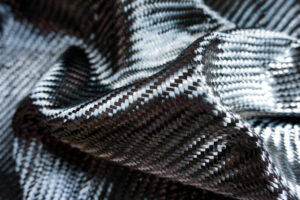
Genuine woven carbon fiber typically shows a consistent pattern, such as a twill, plain, or other engineered weave. The pattern should remain relatively consistent across the visible surface.
However, the appearance alone cannot always prove material authenticity. Some plastic components can reproduce a similar visual pattern.
Therefore, buyers should combine visual inspection with other verification methods.
2. Check the Weight
Weight can provide another useful indication.
Carbon fiber is known for its excellent strength-to-weight ratio. Therefore, genuine carbon fiber components are often lighter than similar parts made from steel or other dense materials.
However, weight alone is not enough to confirm authenticity. A lightweight plastic part can also imitate the appearance of carbon fiber.
Consequently, buyers should consider weight together with construction, material specifications, and supplier documentation.
3. Inspect the Surface Finish
Surface quality can also provide useful clues.
High-quality carbon fiber parts generally feature a consistent weave, smooth surface, and uniform clear-coat finish.
In contrast, low-quality imitation parts may show inconsistent patterns, uneven surfaces, or a plastic-like appearance.
However, different carbon fiber manufacturing methods can produce different surface characteristics. Therefore, surface texture should not be used as the only authenticity test.
Wet Carbon vs. Dry Carbon: Key Differences
For buyers comparing wet carbon and dry carbon, the following table provides a quick overview:
| Performance Factor | Wet Carbon Fiber | Dry Carbon Fiber |
|---|---|---|
| Manufacturing Method | Liquid resin lay-up | Pre-preg carbon fiber |
| Resin Control | More dependent on manual application | More precisely controlled |
| Weight | Generally higher | Generally lower |
| Fiber-to-Resin Ratio | Less optimized | Highly controlled |
| Production Cost | Usually more economical | Usually more expensive |
| Production Flexibility | Suitable for custom and low-volume parts | Better suited to high-performance applications |
| Surface Finish | Can achieve premium appearance | Typically highly consistent |
| Mechanical Consistency | Depends strongly on process control | Generally more consistent |
| Typical Applications | Custom parts and aftermarket styling | Motorsport, aerospace, performance applications |
Conclusion: Choosing the Right Carbon Fiber for Automotive Applications
Carbon fiber is an increasingly popular material for custom car parts because it combines lightweight construction with high strength, stiffness, and distinctive visual appeal.
However, not all carbon fiber parts are manufactured in the same way.
Wet carbon uses liquid resin and offers greater production flexibility. Therefore, it can be suitable for many aftermarket and customized applications.
In comparison, dry carbon typically uses pre-preg materials and controlled curing processes. As a result, it can provide lower weight, better consistency, and high-performance characteristics.
Nevertheless, the right choice depends on the specific application. Buyers should consider weight, strength, stiffness, durability, manufacturing cost, surface finish, and installation requirements before selecting a carbon fiber component.
By understanding the differences between wet carbon and dry carbon, automotive enthusiasts and B2B buyers can make more informed decisions when sourcing custom carbon fiber car parts.



Leave a reply