When installing carbon fiber body kit components, 많은 고객이 재료 품질에 중점을 둡니다., 체중 감소, 그리고 가격. 하지만, 탄소 섬유 바디 키트 부속품 is often the most important factor that determines the final appearance and installation experience.
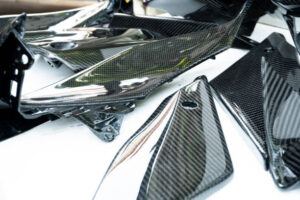
Even premium carbon fiber parts can look low-quality if they have uneven gaps, lifted edges, or poor alignment after installation. 고품질 OEM fit carbon fiber accessories should match the original vehicle body lines, maintain consistent panel gaps, and create a factory-level appearance.
자동차 브랜드의 경우, 유통업체, and modification suppliers, understanding fitment quality helps reduce installation problems and improve customer satisfaction.
Why Does Fitment Define Carbon Fiber Modification Quality?
Poor Panel Alignment Can Affect the Final Appearance
Carbon fiber parts are often installed to enhance vehicle styling. 하지만, the visual effect depends heavily on how accurately the component matches the original body structure.
Common fitment problems include:
- Uneven panel gaps
- Edge lifting
- Incorrect mounting positions
- Misaligned body curves
- Additional adjustment during installation
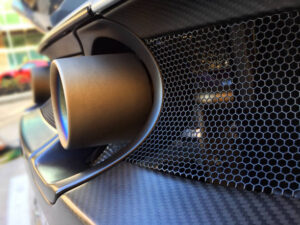
A well-designed carbon fiber component should integrate naturally with the vehicle surface. The gap between the carbon fiber part and the original body panel should remain consistent, with professional manufacturers typically targeting installation gaps close to factory standards.
For many applications, a gap tolerance of around 1 mm or less indicates a high level of manufacturing precision.
How Do Manufacturers Achieve OEM-Level Carbon Fiber Fitment?
3D Scanning and Mold Accuracy Control
The first factor affecting fitment is mold precision.
Professional 3D-scanned carbon fiber parts are developed using accurate vehicle data instead of manual measurements. The production process usually includes:
- Vehicle surface data collection through 3D scanning
- Digital CAD modeling
- Mold design and testing
- Prototype fitting evaluation
- Final production adjustment
Compared with traditional reverse engineering methods, 3D scanning provides more accurate surface information for complex curves and mounting points.
This approach helps carbon fiber manufacturers produce parts that match original vehicle dimensions more consistently.
Material Shrinkage Control During Carbon Fiber Manufacturing
Carbon fiber composite materials may experience slight dimensional changes during curing.
Manufacturing processes directly influence final fitment quality.
| Manufacturing Factor | Impact on Fitment |
|---|---|
| Precise mold temperature control | Reduces dimensional variation |
| Controlled resin ratio | Improves material stability |
| Autoclave curing process | Minimizes deformation |
| Quality inspection after curing | Detects alignment issues |
Autoclave-cured carbon fiber components typically achieve better dimensional stability because controlled temperature and pressure reduce material distortion during curing.
What Installation Methods Affect Carbon Fiber Fitment?
Bolt-On and Adhesive Installation for Exterior Add-On Parts
Different carbon fiber accessories require different installation methods.
Exterior add-on parts such as:
- Front splitters
- 사이드 스커트
- Rear diffusers
- Spoilers
usually use:
- 3M automotive adhesive tape
- Mounting brackets
- Screws or clips
These methods allow installation without major modification to the original vehicle structure.
A properly manufactured part should require minimal adjustment during installation.
Replacement Carbon Fiber Panels Require Professional Installation
Some carbon fiber components replace original body panels, including:
- 탄소 섬유 후드
- Carbon fiber trunk lids
- Carbon fiber doors
These parts require removing factory components and may involve:
- Hinge position adjustment
- Latch alignment
- Panel gap correction
- Mounting point inspection
Because replacement panels directly affect vehicle structure alignment, 전문적인 설치를 권장합니다.
Typical installation time may range from several hours to a full working day, depending on the component type and vehicle model.
How to Check Carbon Fiber Parts Fitment Before Purchase?
Key Evaluation Points for Buyers and Distributors
Before sourcing 맞춤형 탄소 섬유 자동차 부품, buyers should evaluate more than surface appearance.
Important inspection factors include:
| Evaluation Item | What to Check |
|---|---|
| Mold Development | Based on original vehicle data or 3D scanning |
| Surface Matching | Smooth connection with factory body lines |
| Edge Quality | No lifting, uneven trimming, or deformation |
| Mounting Points | Correct hole positions and brackets |
| Test Installation | Physical fitting before mass production |
Professional suppliers should provide technical documentation, fitting samples, or installation feedback from previous projects.
Carbon Fiber Parts Fitment Comparison: Low-Cost vs Precision Manufacturing
Why Cheaper Carbon Fiber Parts May Require More Adjustment
Price differences between carbon fiber components often come from manufacturing accuracy.
| 특징 | Low-Cost Carbon Fiber Parts | Precision Carbon Fiber Parts |
|---|---|---|
| Mold Development | Basic measurement methods | 3D 스캐닝 및 CAD 모델링 |
| Dimensional Accuracy | More variation possible | Controlled production tolerance |
| 설치 | May require modification | Closer to direct installation |
| Surface Alignment | Possible uneven gaps | Factory-style fitment |
A lower purchase price may increase installation labor costs and adjustment time. For professional modification businesses, accurate fitment often provides better overall value.
What Should Buyers Consider When Selecting a Carbon Fiber Parts Manufacturer?
Procurement Checklist for OEM and Wholesale Carbon Fiber Components
For automotive brands and distributors, supplier evaluation should include:
- Carbon fiber production experience
- Mold development capability
- Vehicle scanning technology
- Quality inspection process
- OEM customization support
- Installation testing procedures
A reliable carbon fiber body parts manufacturer should understand both composite manufacturing and automotive installation requirements.
Fitment Determines the Real Value of Carbon Fiber Accessories
The quality of carbon fiber modification parts is not only measured by material grade or surface finish. Installation fitment directly affects the final appearance, installation cost, and customer experience.
Accurate molds, controlled curing processes, and proper installation methods work together to create carbon fiber components with OEM-level alignment.
For buyers sourcing 맞춤형 탄소 섬유 자동차 부품, selecting a manufacturer with strong engineering capability and fitment testing experience is essential for achieving consistent production quality.
다른 provides customized carbon fiber body components with professional mold development, 정밀 제조, and OEM solutions for global automotive modification brands.

답장을 남겨주세요