Daños estructurales de fibra de carbono en automóviles: How to Detect Hidden Impact Failures
Polímero reforzado con fibra de carbono (CFRP) components are widely used in performance vehicles and automotive applications where low weight and high structural stiffness are important. Sin embargo, unlike steel or aluminum, carbon fiber composites do not always show obvious external deformation after an impact.
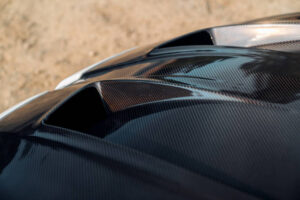
A carbon fiber panel may appear smooth and undamaged even when its internal laminate structure has developed cracks, delaminación, or broken fibers. This makes automotive carbon fiber structural damage difficult to assess through visual inspection alone.👉https://www.saibangcarbon.com/
For automotive technicians, fleet managers, tiendas de espectáculos, and OEM procurement teams, understanding how composite impact damage develops is essential for evaluating component safety, selecting inspection methods, and deciding whether a damaged part can remain in service.
Esta guía explica los principales mecanismos de fallo interno., compara métodos de inspección prácticos, y describe cuándo los componentes de fibra de carbono para automóviles requieren evaluación o reemplazo profesional.
1. ¿Por qué los daños estructurales de la fibra de carbono pueden permanecer invisibles??
Los compuestos de fibra de carbono se comportan de manera diferente a los metales convencionales porque sus propiedades mecánicas dependen de la orientación de la fibra., matriz de resina, secuencia de apilamiento de laminado, y diseño general de componentes.
El acero y el aluminio pueden desarrollar abolladuras visibles., enfermedad de buzo, o deformación permanente cuando se sobrecarga. Los componentes de CFRP pueden recuperar gran parte de su forma externa original conservando el daño interno..
Por lo tanto, el aspecto de la superficie no refleja necesariamente la resistencia estructural restante del componente..
Compuestos de fibra de carbono vs.. Acero y aluminio después del impacto
| Factor de evaluación | Acero y aluminio | Carbon fiber composites |
|---|---|---|
| Response to overload | May yield, bend, or dent | May deform elastically while internal damage develops |
| Visible damage | Often includes dents, enfermedad de buzo, or surface cracking | Internal damage may exist beneath an apparently intact surface |
| Typical failure mechanisms | Plastic deformation, agrietamiento, and localized thinning | Delaminación, craqueo de matriz, fiber-matrix debonding, and fiber fracture |
| Residual load capacity | Depends on material, deformación, and crack severity | Depends on damage location, diseño laminado, fiber continuity, and load direction |
| Inspection requirements | Visual and dimensional checks, supplemented by other tests as needed | Visual inspection may need to be supplemented by suitable non-destructive testing |
| Repair considerations | Some components can be straightened or welded under approved procedures | Structural repairs require composite-specific assessment and approved repair procedures |
La principal diferencia no es que cada impacto de fibra de carbono cause una falla catastrófica.. Bastante, Los daños del CFRP pueden ser menos visibles y más difíciles de evaluar sin comprender la estructura del laminado..
Para componentes críticos para la seguridad, Los técnicos no deben utilizar una superficie aparentemente intacta como única base para devolver la pieza al servicio..
2. Tres tipos de daños estructurales internos de fibra de carbono en automóviles
Impactos de baja velocidad por escombros de carreteras, bordillos, colisiones menores, o la manipulación en taller puede producir daños internos incluso cuando la capa cosmética exterior parece intacta.
Tres modos de falla importantes son la delaminación interlaminar., agrietamiento de la matriz de resina, y fractura de fibras internas.
1. Delaminación interlaminar
La delaminación ocurre cuando las capas compuestas adyacentes se separan entre sí.. Impact loading can generate interlaminar stresses that exceed the bonding strength between layers.
Once delamination develops, the affected plies may no longer transfer loads as intended. Depending on its size, ubicación, and orientation, this separation can reduce stiffness, weaken local load paths, and increase the risk of further damage under repeated loading.
Delamination may be difficult to detect visually because the outer clear coat and cosmetic carbon weave can remain largely intact.
Why it matters: A component that looks normal may have reduced structural capacity. Delamination near mounting points, joints, or highly loaded regions deserves particular attention.
2. Resin Matrix Micro-Cracking
The resin matrix binds the carbon fibers together, transfers stresses between fibers, and contributes to the composite’s overall mechanical behavior.
Un impacto puede producir grietas microscópicas en la matriz o dañar la interfaz fibra-matriz.. Estos defectos pueden reducir la rigidez local e interferir con la transferencia de carga., especialmente bajo compresión o carga repetida.
El agrietamiento de la matriz también puede contribuir a daños mayores a medida que el componente experimenta vibraciones., ciclo térmico, o tensión mecánica adicional.
Why it matters: No es necesario que las fibras de carbono estén visiblemente rotas para que el compuesto pierda parte del rendimiento previsto.. La gravedad depende de la distribución de las grietas., arquitectura laminada, y cargas de servicio.
3. Fractura de fibra interna
Las fibras de carbono proporcionan gran parte de la resistencia a la tracción y la rigidez de un componente de CFRP a lo largo de sus orientaciones diseñadas.. A sufficiently severe impact can fracture fibers within internal plies while leaving the outer cosmetic layer relatively undamaged.
Damage to load-bearing fibers can interrupt critical structural load paths. The consequences depend on the number of affected fibers, their orientation, the location of the damage, and the component’s design.
Why it matters: A damaged structural laminate may no longer withstand the loads for which it was designed. This is especially important for components exposed to high dynamic loads, fuerzas aerodinámicas, or repeated track use.
3. How to Detect Hidden Carbon Fiber Impact Damage
Because visual inspection alone cannot reliably rule out internal CFRP damage, technicians may need non-destructive testing (END) to assess the affected area.
The appropriate method depends on component thickness, arquitectura laminada, access to the inspection area, expected damage type, and the consequences of failure.
Comparison of Carbon Fiber Inspection Methods
| Inspection method | How it works | Potential benefits | Important limitations |
|---|---|---|---|
| Inspección visual | Examines the surface for cracks, chips, rayones, distortion, and impact marks | Fast and useful as the first inspection step | Cannot reliably exclude hidden internal damage |
| Coin-tap or tap testing | Uses changes in acoustic response to identify possible disbonding or delamination | Relatively simple field screening for suitable structures | Results depend on geometry, operator experience, construcción laminada, and accessible surfaces |
| Ultrasonic inspection | Uses sound-wave transmission or reflection to identify internal discontinuities | Can help locate and characterize certain internal defects | Requires suitable equipment, trained personnel, and a method appropriate for the laminate |
| Escaneo C ultrasónico | Maps ultrasonic responses across an inspection area | Can provide a visual map of suspected internal damage | Inspection setup and interpretation must account for material thickness and geometry |
| Infrared thermography | Measures thermal-response differences that may indicate subsurface defects | Can inspect areas relatively quickly under suitable conditions | Sensitivity depends on heating method, defect depth, propiedades de los materiales, and test configuration |
Is a Coin-Tap Test Enough?
A coin-tap test can be useful for preliminary screening. A relatively sharp, consistent acoustic response may indicate a different condition from a dull or hollow response.
Sin embargo, acoustic changes do not prove that a component is structurally sound or damaged. Geometry, stiffeners, bonded joints, and laminate variations can also affect the sound.
Para componentes críticos para la seguridad, use the tap test only when appropriate for the part and inspection procedure. Escalate suspicious findings to a qualified composite inspection specialist.
When Is Ultrasonic C-Scan Appropriate?
Ultrasonic C-scan inspection can help map internal discontinuities across a composite panel. It may be useful when the affected area is difficult to assess visually or when the component’s structural role warrants a more detailed examination.
The inspection procedure must suit the component’s construction. Complex geometries, thick laminates, bonded structures, and inaccessible surfaces may require alternative or complementary techniques.
Can Thermal Imaging Find Internal Damage?
Thermography identifies differences in surface temperature response that may reveal subsurface defects. It can be useful for certain composite structures, but its effectiveness depends on the inspection setup and the characteristics of the suspected damage.
Thermal imaging should not be treated as a universal substitute for ultrasonic inspection or another validated NDT method.
4. Do Scratches or Minor Impacts Require Carbon Fiber Replacement?
Not every surface defect indicates structural damage. Cosmetic clear-coat scratches, coating damage, and internal laminate failures have different implications.
The first step is to determine which layer has been affected.
Cosmetic Damage vs. Structural Damage
| Observed condition | Potential implication | Recommended action |
|---|---|---|
| Superficial clear-coat scratch | May affect only the finish | Inspect the depth and follow an approved refinishing procedure |
| Damage extending into the visible carbon weave | May involve fibers or resin beneath the coating | Obtain a composite-specific assessment |
| Suspected delamination after impact | Internal separation may affect structural performance | Use an appropriate inspection method and follow OEM guidance |
| Visible fiber fracture or laminate cracking | May indicate structural damage | Remove the component from service when safety is uncertain and arrange qualified assessment |
| Impact damage near a mounting point or load-bearing joint | May affect a critical load path | Prioritize inspection and follow the manufacturer’s disposition criteria |
A clear-coat scratch does not automatically require structural replacement if the damage is confined to the coating. En cambio, an intact-looking surface does not establish that the underlying laminate is undamaged.
If a scratch cuts into the structural laminate, or an impact may have damaged internal fibers, the part requires further assessment before repair or continued use.
Can Damaged Carbon Fiber Parts Be Repaired?
Some CFRP components can be repaired using approved composite repair procedures. Others must be replaced because of their structural function, damage severity, material construction, or manufacturer requirements.
Unlike conventional metal panel repair, composite repair may require specialized materials, controlled curing conditions, preparación de la superficie, and restoration of the intended laminate architecture.
Do not assume that filling a crack or refinishing the surface restores the original load-bearing capacity. The repair must be appropriate for the component and validated under the relevant repair requirements.
5. What Should Track-Day and Performance Vehicle Owners Do After an Impact?
Track vehicles and performance cars may expose structural components to repeated cornering loads, vibración, fuerzas aerodinámicas, and demanding operating conditions.
If a carbon fiber component experiences a significant impact, do not return it to high-load use solely because it shows no visible deformation.
Follow a controlled assessment process:
- Document the impact: Record the location, estimated severity, and any unusual sounds or changes in component alignment.
- Inspect the exterior: Check for cracks, chips, exposed fibers, distortion, and damage near joints or mounting points.
- Review the component’s role: Identify whether it is cosmetic, semi-structural, or safety-critical.
- Arrange appropriate inspection: Use an OEM-approved procedure or a qualified composite specialist to determine whether NDT is required.
- Follow the disposition decision: Repair or replace the component according to the findings, manufacturer requirements, and applicable safety standards.
When the structural integrity of a safety-critical component remains uncertain, keep it out of service until it has been assessed.
6. B2B Procurement Checklist for Automotive Carbon Fiber Components
For OEM buyers, performance parts suppliers, fleet managers, and composite manufacturers, impact resistance and damage assessment should be considered during component selection—not only after a failure occurs.
1. Review the Laminate Design
Request relevant information about fiber orientation, ply stacking sequence, sistema de resina, core construction where applicable, and critical load paths.
These details help engineers understand how the part is intended to carry loads and which inspection methods may be suitable.
2. Verify Quality-Control Procedures
Ask suppliers about laminate manufacturing controls, cure-process records where applicable, inspección dimensional, and procedures for identifying voids or other manufacturing defects.
Documentation should match the actual component design and production process.
3. Evaluate Impact Performance
Where impact resistance is important, request relevant test data or engineering validation for the intended application.
The test method and acceptance criteria should reflect the component’s geometry, expected loading, and structural function. A generic material datasheet alone may not demonstrate the performance of the finished component.
4. Confirm Inspection and Repair Requirements
Before procurement, clarify:
- Which visual inspection procedures are required.
- Whether tap testing or another NDT method is suitable.
- Which damage thresholds require specialist assessment.
- Whether approved repairs are available.
- Which damage conditions require mandatory replacement.
- What records must be retained after inspection or repair.
5. Assess Supplier Engineering Support
A capable automotive composite supplier should be able to discuss laminate specifications, manufacturing quality controls, relevant structural validation, and application-specific inspection requirements.
For custom OEM programs, early coordination between design engineers, manufacturing teams, and maintenance specialists helps establish realistic quality and service-life expectations.
7. Frequently Asked Questions About Automotive Carbon Fiber Structural Damage
Can carbon fiber be damaged without visible cracks?
Sí. An impact can cause internal delamination, craqueo de matriz, or fiber fracture without producing obvious surface damage. Visual inspection alone cannot reliably rule out these defects.
What is the most dangerous type of carbon fiber impact damage?
There is no single universally most dangerous damage mode. Delaminación, craqueo de matriz, and fiber fracture can all compromise structural performance. Severity depends on damage location, extent, diseño laminado, and applied loads.
Is a coin-tap test reliable for carbon fiber inspection?
Tap testing is useful for preliminary assessment of suitable composite structures, but it has limitations. Suspicious findings and safety-critical components may require a more detailed NDT procedure.
Does every damaged carbon fiber component need replacement?
No. Some damage is limited to the coating or cosmetic surface, while certain composite components can be repaired under approved procedures. Replacement decisions should depend on the component’s structural role, inspection findings, and manufacturer requirements.
Can a carbon fiber part with no visible deformation be used on a track vehicle?
No automáticamente. After a significant impact, the part may contain hidden structural damage. Obtain an appropriate assessment before returning a safety-critical component to high-load operation.
Conclusión: Inspect the Structure, Not Just the Surface
Automotive carbon fiber structural damage can remain hidden beneath an apparently intact finish. Delaminación, craqueo de matriz, and internal fiber fracture may reduce load-bearing capacity without the obvious dents associated with metal components.
For technicians and procurement engineers, the essential principles are straightforward: distinguish cosmetic damage from structural damage, select inspection methods appropriate for the laminate, and follow manufacturer-approved repair or replacement criteria.
For automotive OEMs and performance parts buyers, combining sound laminate design with manufacturing quality controls, documented inspection procedures, and qualified engineering support helps improve the reliability of carbon fiber components throughout their service life.



Deja una respuesta