Modern vehicle owners want more than attractive accessories. They now expect exterior parts to deliver reliable performance under harsh environmental stress. Because of this shift, premium scratch-resistant carbon fiber spoiler designs have grown more important in today’s automotive market. These parts must resist UV exposure, flying sand, aggressive chemicals, and constant physical wear. Therefore, understanding the durability factors behind these spoilers helps buyers and industry professionals evaluate true long-term value.
This article examines how advanced materials, precision manufacturing, and protective coating systems allow carbon fiber spoilers to survive demanding road conditions. It also highlights why these spoilers remain a top choice for sports cars, luxury models, and custom performance builds. Throughout the discussion, the analysis focuses on how each durability factor contributes to the long-term quality of carbon fiber car parts.
1. Why Carbon Fiber Is the Preferred Material for Harsh Environments
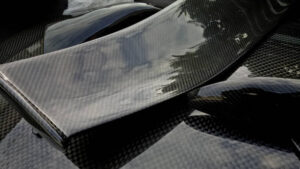
Carbon fiber has long been known for its strength-to-weight advantage. No entanto, its environmental resilience is equally significant. Because of its stable molecular structure, the material resists deformation when exposed to extreme temperatures. It also maintains its shape under constant aerodynamic force, even at high speeds. As a result, a carbon fiber rear spoiler delivers stable downforce while reducing total weight.
Additionally, carbon fiber’s surface responds well to protective coatings. These coatings form a durable barrier that prevents scratches, oxidation, and UV damage. Since harsh sunlight and airborne particles can degrade traditional ABS plastic, carbon fiber offers a clear upgrade for drivers seeking long-term reliability.
2. UV Exposure: The First Major Threat to Spoiler Lifespan
UV radiation is one of the most common causes of surface damage on exterior car parts. When sunlight hits a standard spoiler, it can trigger fading, discoloration, and surface cracking. Over time, these effects reduce both appearance and structural integrity.
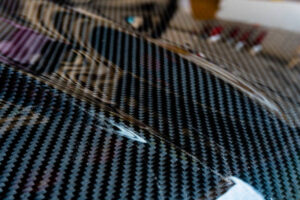
Premium scratch-resistant carbon fiber spoiler systems counter this threat through engineered resin formulations and UV-blocking coatings. The resin absorbs far less UV energy than conventional polymers. Because of this property, the spoiler retains its deep carbon weave finish even after long exposure to sunlight.
Moreover, modern UV-resistant clear coats extend this durability. These coats reflect and absorb harmful wavelengths before they reach the carbon fiber layers. As a result, the spoiler maintains color stability, surface clarity, and mechanical strength. Many coatings also contain stabilizing additives that slow the aging process. This ensures consistent performance across multiple years of intense sun exposure.
3. Sand Impact: Abrasion Resistance on Dusty or High-Speed Roads
Vehicles regularly encounter airborne sand and gravel, especially in coastal regions, desert climates, and construction zones. Even at moderate speeds, these particles can strike a spoiler with a strong abrasive force. For plastic spoilers, this results in surface pitting and scratches. No entanto, carbon fiber offers far better abrasion resistance.
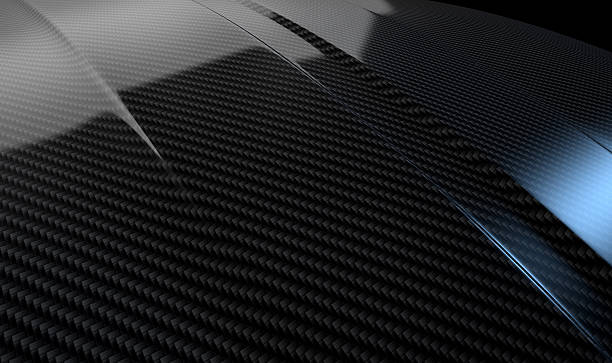
The durability stems from the toughness of the carbon weave. Each fiber holds high tensile strength, which helps it withstand micro-impacts without surface deformation. Because of the tightly bound structure, the spoiler spreads the impact force across a wider area. This reduces the chance of deep abrasion.
Furthermore, sand resistance improves considerably when the spoiler includes a scratch-resistant protective top layer. This layer allows small particles to glide across the surface instead of cutting into the structure. Therefore, even after extended exposure to dusty roads, the spoiler keeps its smooth finish.
For drivers who participate in track days or off-road events, this abrasion resistance is essential. It ensures that performance upgrades remain visually appealing while withstanding constant debris contact.
4. Protection Against Road Chemicals and Environmental Pollutants
Vehicles frequently encounter corrosive chemicals from road maintenance, fuel residues, cleaning products, and environmental pollutants. Many of these substances damage traditional plastic spoilers, causing deformation or surface bleaching. Premium carbon fiber addresses this challenge more effectively.
The resin matrix used in high-grade carbon fiber car parts resists chemical penetration. Because the material has low reactivity, liquids cannot easily break down its structure. Even when exposed to acidic pollutants or alkaline cleaning agents, the spoiler remains stable.
Additionally, protective coatings enhance this resistance. Many coatings include chemical-block additives that prevent stains and surface erosion. Therefore, drivers can clean their vehicles with strong detergents without risking damage to the spoiler. This is especially important for regions that use heavy road salt, since salt accelerates wear on untreated exterior components.
5. Temperature Fluctuations and Their Impact on Spoiler Performance
Carbon fiber spoilers frequently experience rapid temperature changes. A vehicle parked under direct sunlight may reach high surface temperatures. Once it moves into shade, the temperature drops quickly. These fluctuations stress many materials, causing expansion and contraction.
No entanto, carbon fiber expands very little under heat. Because of this stability, a scratch-resistant carbon fiber spoiler maintains its shape even during sudden temperature shifts. The resin remains flexible enough to absorb thermal stress without cracking. As a result, the spoiler keeps its aerodynamic efficiency in all seasons.
In colder environments, carbon fiber remains rigid and stable. Unlike plastic, which becomes brittle at low temperatures, carbon fiber retains its strength. This prevents impact cracks from small stones or ice particles during winter driving.
6. Aerodynamic Loads and Structural Integrity on High-Speed Roads
High-speed driving places a heavy aerodynamic force on rear spoilers. These forces attempt to bend or deform the spoiler. With plastic spoilers, this stress leads to micro-cracks that grow over time. No entanto, carbon fiber offers superior structural stability.
The high tensile strength of the carbon weave allows the spoiler to resist torsion, bending, and vibration. Because the structure is layered and reinforced with resin, it creates a rigid surface that remains stable under load. As a result, the spoiler maintains consistent downforce and supports vehicle control.
Many performance vehicles rely on carbon fiber spoilers specifically for this reason. When combined with precision mounting hardware, the spoiler delivers reliable stability during rapid acceleration and sharp cornering. For modified cars with upgraded engines, this aerodynamic reliability becomes essential.

7. Manufacturing Quality and Its Influence on Long-Term Durability
The durability of a carbon fiber spoiler depends heavily on manufacturing quality. Poor curing techniques, low-grade resin, or uneven fiber alignment can reduce lifespan. Because of these risks, experienced manufacturers follow strict procedures to ensure consistent performance.
For example, premium suppliers use vacuum infusion or autoclave curing. These methods ensure strong bonding between fibers and resin. With better bonding, the spoiler resists delamination and surface cracking. Additionally, manufacturers apply multiple coating layers to maximize scratch and UV resistance.
Quality control tests help ensure every spoiler meets durability standards. Impact resistance, bending strength, and temperature testing allow suppliers to evaluate mechanical stability. Because the industry demands reliability, suppliers like Saibang focus on precision fabrication. This commitment ensures that each carbon fiber rear spoiler performs well in real-world conditions.
8. Maintenance Practices That Extend the Life of Carbon Fiber Spoilers
Even though carbon fiber offers high durability, proper maintenance helps extend its life. Gentle cleaning techniques prevent surface wear. High-quality wax or ceramic coatings can add protection from UV rays and abrasion. Because the surface is already strong, these treatments enhance gloss while supporting scratch resistance.
Drivers should also avoid harsh brushes or abrasive sponges. Smooth microfiber materials keep the surface intact without causing wear. When maintained well, premium scratch-resistant carbon fiber spoilers can last for many years with minimal aging.
Conclusion: Why Carbon Fiber Spoilers Remain the Best Option for Harsh Environments
Premium carbon fiber spoilers withstand some of the harshest road conditions. Their durability comes from advanced materials, protective coatings, and precise manufacturing. By resisting UV radiation, abrasive sand, chemical contaminants, and extreme temperature changes, these spoilers maintain their performance and appearance. Because of this resilience, they continue to dominate modern automotive design.
For drivers seeking long-lasting exterior upgrades, scratch-resistant carbon fiber spoilers remain the most reliable choice. It delivers strength, stability, and style while protecting itself from the forces that damage traditional materials. As environmental conditions grow harsher worldwide, this durability becomes even more valuable. Because of that trend, carbon fiber’s role in automotive performance continues to expand across global markets.



Leave a reply