
Lightweight has become an overused word in automotive engineering. For years, carbon fiber body parts have been described almost exclusively through numbers: kilograms reduced, strength-to-weight ratios, and lap time improvements. While these metrics matter, they tell only half the story.
Modern automotive design lives at the intersection of physics and perception.
With the rise of 3D carbon fiber body parts, manufacturers no longer pursue weight reduction alone. Instead, they engineer a paradox: parts that feel visually solid, powerful, and dense—while remaining physically light at the kilogram level. This intentional contradiction creates a unique sensory appeal. Drivers see strength. Engineers deliver lightness. The result feels premium, aggressive, and emotionally compelling.
This article explores how 3D carbon fiber surface architecture, light behavior, and structural engineering allow carbon fiber body parts to achieve “visual weight gain” while realizing extreme physical weight reduction. More importantly, it explains why this paradox has become a defining language in modern performance vehicle design.
Why Lightweight Alone Is No Longer Enough
Early carbon fiber adoption focused on motorsport. Engineers prioritized weight savings above all else. Flat weave patterns, simple geometries, and exposed fibers communicated function, not emotion.
However, today’s performance and premium vehicle buyers expect more. They associate vehicle mass—not actual weight, but perceived mass—with stability, safety, and value. A body part that looks too thin or flat may feel fragile, even if it performs exceptionally well.
This shift forces manufacturers to rethink design logic. 3D carbon fiber body parts respond by delivering physical lightness without sacrificing visual presence.
Understanding “Visual Weight” in Automotive Design
Visual weight refers to how heavy, solid, or substantial an object appears—regardless of its actual mass. In automotive body design, visual weight influences emotional response before any driving experience begins.
Several factors define visual weight:
-
Surface depth and shadow complexity
-
Light reflection gradients
-
Edge thickness perception
-
Structural layering cues
-
Texture continuity across surfaces
Traditional flat carbon fiber panels struggle in this area. Their uniform often appears thin or decorative. By contrast, 3D carbon fiber introduces spatial complexity that enhances perceived mass.

The Role of 3D Surface Architecture
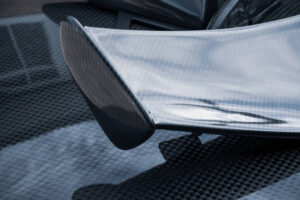
3D carbon fiber body parts differ fundamentally from flat laminates. They incorporate curvature, stepped planes, recessed channels, and raised structural lines. These features manipulate how light travels across the surface.
Instead of reflecting light uniformly, 3D surfaces create gradients, shadows, and depth cues. As the vehicle moves, these surfaces appear alive. They feel sculpted rather than stamped.
This effect increases perceived density without adding material.
From a psychological perspective, the human eye interprets complex surfaces as stronger and heavier. By leveraging this instinct, 3D carbon fiber body parts create presence without mass.
Light as a Structural Partner
Carbon fiber does not merely carry loads. It carries light.
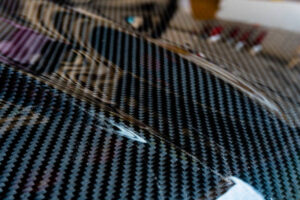
The woven structure of carbon fiber interacts with light at multiple angles. In 3D configurations, this interaction intensifies. Concave areas absorb light, while convex edges reflect it sharply. The weave pattern stretches and compresses visually across curves, creating dynamic texture.
Manufacturers like Saibang engineer surface geometry alongside weave orientation. This coordination ensures that visual depth aligns with structural intent. As a result, the part looks robust because it is structurally optimized—just not heavy.
Physical Weight Reduction Through Structural Intelligence
While visual complexity increases, physical weight decreases through engineering precision.
3D carbon fiber body parts achieve weight reduction by:
-
Eliminating unnecessary material through geometry
-
Using directional fiber placement for load paths
-
Reducing reliance on internal metal reinforcements
-
Integrating stiffness into shape rather than thickness
Instead of adding layers, designers add structure. Curvature replaces mass. Ribbing replaces bulk. This approach delivers kilogram-level weight reduction without sacrificing rigidity.
The Sensory Paradox: Seeing Mass, Feeling Lightness
When a driver opens the hood or installs a carbon fiber panel, the moment of contact matters. A part that looks substantial but feels unexpectedly light creates a powerful impression.
This sensory contradiction enhances perceived engineering sophistication. It signals advanced manufacturing rather than compromise. In premium and performance markets, this experience strengthens brand trust.
3D carbon fiber body parts thrive in this paradox. They allow manufacturers to impress visually while exceeding performance expectations.
Why Flat Carbon Fiber Feels Outdated
Flat carbon fiber once symbolized advanced technology. Today, it often feels cosmetic. Without depth, flat panels fail to communicate structural intent.
In contrast, 3D carbon fiber surfaces suggest engineering complexity. They imply airflow management, load optimization, and purposeful design. Even non-technical viewers sense this difference intuitively.
As a result, 3D carbon fiber body parts increasingly replace flat alternatives in hoods, diffusers, splitters, fenders, and aerodynamic components.
Aerodynamics and Visual Density: A Shared Language
3D carbon fiber does more than look heavy. It often works harder aerodynamically.
Channels, fins, and contours guide airflow while adding visual volume. This dual function reinforces authenticity. The part looks aggressive because it performs aggressively.
This alignment matters. Visual weight feels convincing only when it matches functional logic. Saibang designs 3D carbon fiber body parts with this balance in mind, ensuring that form follows performance.
Manufacturing Challenges and Precision Control
Creating visual depth without adding weight requires manufacturing discipline.
3D carbon fiber body parts demand:
-
Accurate mold design
-
Precise fiber layup control
-
Consistent resin distribution
-
Tight tolerance curing processes
Any inconsistency risks distortion, surface defects, or unnecessary material accumulation. Advanced tooling and process control ensure that visual complexity does not compromise weight targets.
Through controlled production, manufacturers deliver repeatable quality across batches.

Customization as an Extension of Design Psychology
Different vehicle segments require different visual weight profiles.
A track-focused car may favor sharp geometry and exposed structural cues. A luxury performance model may prefer smoother depth and layered surfaces. Customization allows manufacturers to tune visual mass without altering physical weight significantly.
Saibang supports this approach by offering customizable 3D carbon fiber body parts tailored to vehicle identity, performance goals, and market positioning.
Emotional Value Beyond Performance Metrics
Numbers alone do not sell cars. Emotion does.
When buyers choose carbon fiber body parts, they seek more than weight reduction. They seek identity, presence, and craftsmanship. 3D carbon fiber satisfies these desires by delivering a product that feels engineered and expressive.
This emotional value justifies premium positioning and strengthens brand differentiation.
Sustainability Through Intelligent Lightweighting
Reducing physical weight supports sustainability goals. Lighter vehicles consume less energy and produce fewer emissions over their lifecycle.
By achieving weight reduction through structure rather than material volume, 3D carbon fiber body parts minimize waste while maximizing performance. Intelligent design replaces excess consumption.
This efficiency aligns performance engineering with environmental responsibility.
Conclusion: When Lightness Carries Weight
True innovation does not eliminate contradiction. It embraces it.
3D carbon fiber body parts succeed because they play a reverse game—adding visual weight while subtracting physical mass. Through surface depth, light interaction, and structural intelligence, they deliver a sensory paradox that feels premium, powerful, and purposeful.
For manufacturers like Saibang, this approach moves beyond lightweight narratives. It injects soul into every gram.
And in modern automotive design, that soul matters as much as speed.





Leave a reply