
The story of carbon fiber components begins in aerospace. Engineers once sought lightweight yet durable materials that could withstand extreme environments. Carbon fiber emerged as the ideal candidate. Its unmatched strength-to-weight ratio and resistance to fatigue made it indispensable in advanced aircraft. Over time, these benefits began to attract the attention of automotive innovators. Today, carbon fiber components move beyond jet engines and fuselages into sports cars, luxury sedans, and even consumer vehicles. This cross-industry evolution reshapes how both transportation and manufacturing approach performance, safety, and efficiency.
Aerospace Origins of Carbon Fiber
In aerospace design, weight reduction translates directly into fuel efficiency and extended range. Early projects in the mid-20th century applied carbon fiber composites to aircraft fuselages, wings, and turbine blades. The goal was not merely to reduce mass but also to ensure structural stability under high stress. Engineers valued carbon fiber’s ability to resist deformation and corrosion in extreme conditions. Additionally, its low thermal expansion minimized distortion during temperature fluctuations. These features helped establish carbon fiber components as essential to modern aerospace.
 Material Properties That Enabled Expansion
The breakthrough of carbon fiber lies in its molecular structure. The material consists of thin strands of crystalline carbon, aligned for maximum tensile strength. These fibers, when combined with polymer resin, create composites stronger than steel yet significantly lighter. Such composites also resist fatigue and can sustain repeated stress cycles without cracking. This property is critical in industries where reliability ensures safety. Furthermore, carbon fiber exhibits excellent energy absorption, making it valuable for impact-resistant applications. These qualities, proven in aerospace, made their eventual transfer to the automobile industry both logical and inevitable.
The Automotive Shift Toward Advanced Materials
Automotive manufacturers long sought ways to balance performance with efficiency. Traditionally, metals such as steel and aluminum dominated car design due to cost and ease of production. However, the rising demand for fuel economy and environmental responsibility shifted focus to alternative materials. High-performance racing vehicles first demonstrated the practical benefits of carbon fiber components. The lightweight chassis improved acceleration, cornering, and fuel efficiency. As production techniques evolved, carbon fiber spread from racetracks to luxury consumer cars. Eventually, advances in processing enabled its adoption in broader market segments.
Carbon Fiber in High-Performance Vehicles
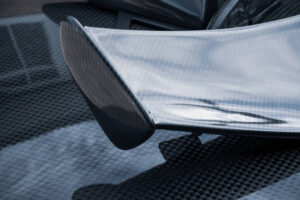
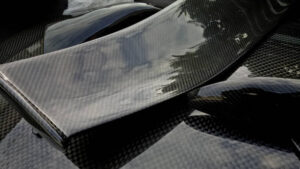
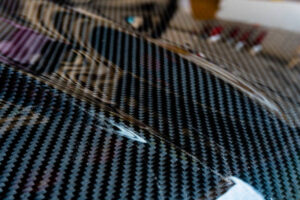
Sports cars highlight the most visible impact of carbon fiber. Supercars integrate full carbon monocoque bodies, reducing weight while maintaining rigidity. This allows for improved handling and safety during high-speed driving. The aesthetic value also contributes to its appeal. Exposed weaves and glossy finishes showcase both elegance and engineering. Automakers emphasize not only speed but also a futuristic identity tied to innovation. In this sector, carbon fiber components become symbols of prestige as much as functional upgrades.
Expansion into Mainstream Consumer Models
While once reserved for elite models, carbon fiber has gradually entered mass-market vehicles. Automakers introduce components such as roof panels, hoods, and interior trims made from composites. These parts reduce overall weight without requiring a full carbon chassis. The impact is significant, as lower mass improves fuel efficiency and reduces emissions. Hybrid and electric vehicle producers, in particular, explore carbon fiber to extend battery range. Manufacturers also market carbon fiber as a lifestyle choice, emphasizing its connection to aerospace innovation and sustainable design.
 Manufacturing Challenges and Solutions
Despite its benefits, carbon fiber production poses challenges. Traditional methods, such as autoclave curing, require high energy and long processing times. Costs remain a barrier for widespread adoption. However, research and development aim to streamline production. Automated layup systems and resin transfer molding reduce labor and improve consistency. Recycling initiatives also emerge, creating new ways to reuse fibers without compromising strength. As these technologies mature, carbon fiber components will become increasingly accessible. This evolution ensures broader integration across the automotive industry.
Cross-Industry Synergy and Innovation
The collaboration between the aerospace and automotive sectors accelerates material development. Innovations pioneered for aircraft often find rapid application in cars. Conversely, the automotive industry contributes to scaling techniques that lower production costs. This synergy drives mutual progress. Moreover, the same principles extend into consumer electronics, sports equipment, and renewable energy systems. Wind turbines, for instance, employ carbon fiber blades for higher efficiency. The cross-industry journey illustrates how advanced materials evolve through shared goals of performance, sustainability, and innovation.
Future Directions for Carbon Fiber Applications
Looking ahead, carbon fiber components will likely define the future of mobility. Electric vehicles demand lighter structures to maximize battery life. Autonomous cars will integrate composites to balance weight with structural safety. In parallel, sustainable production will gain importance, with bio-based resins and recyclable fibers leading research. Aerospace will continue to push limits in space exploration, while the automotive industry adapts solutions for everyday use. The boundary between high-performance and consumer-grade will blur further, making carbon fiber a standard rather than an exception.
Conclusion
The evolution of carbon fiber components from aerospace to automobiles reflects a broader trend in technology transfer. Originally designed for extreme conditions, these materials now enhance daily transportation. Their unmatched combination of strength, lightness, and adaptability makes them essential across multiple industries. Challenges in cost and manufacturing are steadily being addressed through innovation and collaboration. As a result, carbon fiber’s role will expand, shaping the future of engineering and design. For companies like Saibang, specializing in carbon fiber body accessories, this transformation highlights both opportunity and responsibility. The ability to deliver advanced, efficient, and visually striking products positions them at the heart of this global material revolution.




Leave a reply