
Carbon fiber tells a story through its texture. Every high-end car wears it like a tailored suit. However, do you truly understand the “K” numbers? Let’s reveal the hidden language of carbon fiber exhaust tips.
What Does the “K” Actually Mean?
First, we must define the basic unit. One “K” represents 1,000 tiny carbon filaments. Therefore, 3K means a bundle of 3,000 threads.
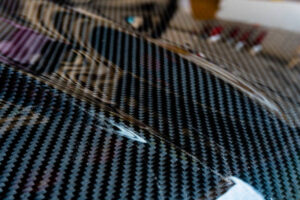
[Image showing a close-up comparison of 3K and 12K carbon fiber bundles]
Consequently, a lower K number creates a tighter pattern. Conversely, a higher K creates a larger, bolder look. Each choice changes the visual energy of the car.
3K: The Refined Precision
Next, let’s look at 3K carbon fiber. This is the most popular choice worldwide. It offers a delicate and dense appearance.
-
Style: It feels sophisticated and highly technical.
-
Best Match: It perfectly suits agile Japanese performance cars.
-
Result: The finish looks incredibly smooth under the light.
Most enthusiasts choose 3K for its classic, high-tech vibe. It speaks of speed and modern engineering.
6K and 12K: The Bold Statements
What if your vehicle has more muscle? Then, we move to 6K or 12K options. These larger weaves create a rugged, industrial atmosphere.
6K provides a balanced, powerful texture. Thus, it fits American muscle cars beautifully. On the other hand, 12K features massive, visible bands of fiber.
Heavy-duty trucks and off-roaders love this aggressive look. It screams durability and raw strength. Therefore, the weave matches the vehicle’s “tough” personality.
The Art of the Weave Pattern
Beyond the K number, the weaving method matters. Each style reflects light differently on carbon fiber exhaust tips.
-
Plain Weave (1×1): A simple checkerboard that looks very stable.
-
Twill Weave (2×2): A diagonal pattern with a strong 3D effect.
-
Satin Weave: A smooth, complex look for unique designs.
Twill is the most common for automotive upgrades. It follows the curves of the tip elegantly.
Advice for Every Designer
Always remember that texture is a design tool. You aren’t just choosing a protective shell. Instead, you are giving the exhaust a distinct character.
Select the weave that mirrors the car’s soul. When the pattern matches the performance, the design succeeds. A perfect tailpipe starts with the right thread count.





Leave a reply